Pregis uses its proprietary EcoGauge to calculate the total environmental impact of product damages
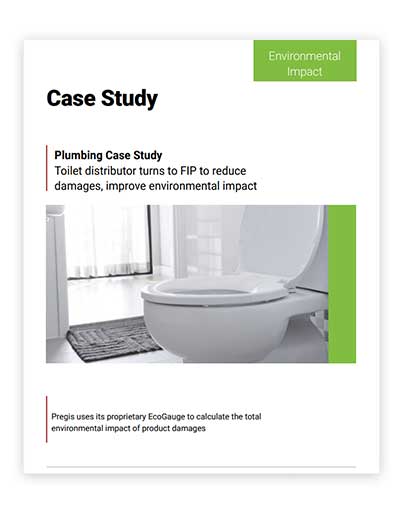
A major U.S. distributor of plumbing supplies expanded its direct to consumer (DTC) portfolio to include toilets. Sales were up, but these heavy, fragile products had a 14% damage rate, adding hundreds of thousands of dollars in unnecessary costs. If the company was going to continue to fulfill DTC it needed to find an alternative packaging solution that reduced damages and lowered environmental impact.
The Problem
The distributor receives large quantities of toilets on pallets from manufacturers. It is then tasked with creating individual packages to ship direct to consumers. The distributor had been using a case-in-case approach where the toilet was loaded into a primary case, which was then inserted into a master shipper. Both cases were being fabricated on site from blanks.
To cushion the base, the distributor had been using 1.5-inch engineered foam that had been fabricated into corners. It was also using polystyrene peanuts in the space between the cases as void fill. The approach failed repeatedly due to multiple issues. The fabricated engineered foam corners (4- x 4-inches) were too small to adequately support the load. And the gap between the two cases was inconsistent, some packs had large voids that were not cushioned with any packaging and other packs were too tight, crushing peanuts and negating their ability to cushion.</span
Using this pack method toilets were too often arriving damaged, delaying construction projects. The company was suffering a
significant financial impact by replacing and fulfilling expensive products and customers were losing confidence in its ability to
delivery ready-to-install goods.
The Solution
Pregis knew from experience that using foam-in-place (FIP) produced by its IntelliPack® SmartBagger™ was the ideal solution to brace and cushion the load. However, the distributor rejected this solution because the foam was not recyclable.
Packaging material is just one factor in the total environmental impact of product fulfillment. To help demonstrate this to the distributor, Pregis used its proprietary EcoGauge calculator.
field failures as well as potential leaking that could create a dangerous situation in the operating room. Pregis was able to custom engineer a film to meet the high quality requirements and stabilize the inconsistency in processing.
...use the form on the right to download the full case study!
